
-
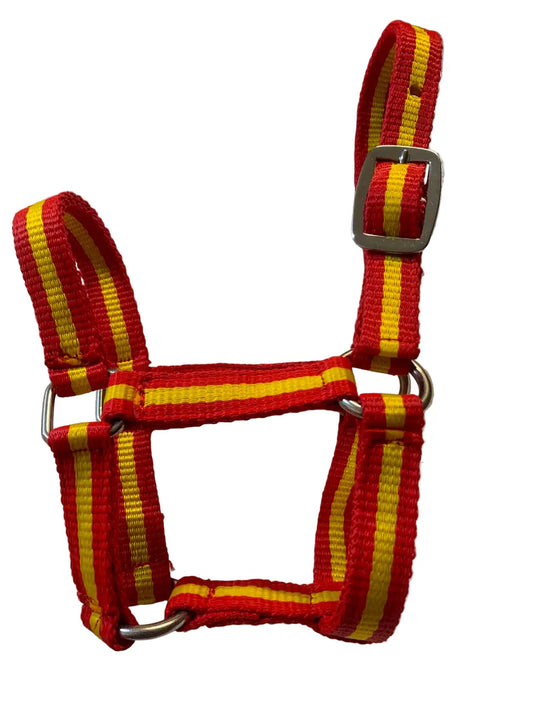
Criterion Economical Nylon Foal Headcollar – Bundle of 5
Precio habitual £28.00 GBPPrecio habitualPrecio unitario por£60.00 GBPPrecio de oferta £28.00 GBPOferta

Introducing Your Foal to a Headcollar
Introducing a young horse to a headcollar is one of the first steps in their handling education, and getting the fit and fabric right from day one makes that process far easier for both foal and handler. Our foal headcollar range covers leather and nylon options, sized specifically for miniature Shetland and standard foals, with field-safe designs built in where they matter most. Whether you're preparing a foal for its first leading lesson or need something durable for daily turnout, the right headcollar makes early handling calmer and safer.
Leather Foal Headcollars
Leather remains the classic choice for foal handling. It softens and moulds with wear, sits comfortably against a young horse's face, and holds its shape through daily use without stretching out of shape the way some synthetic materials can over time. Leather also tends to age well, developing a supple feel that many handlers prefer for regular, supervised sessions. If you're handling a foal frequently from an early age, whether for leading practice, grooming, or general handling, leather is generally worth the investment, both for comfort and longevity.
Nylon Foal Headcollars
Nylon foal headcollars are the practical, low-maintenance option. They're quick to wipe clean after a muddy field session, resistant to weather, and typically sit at a lighter price point than leather. Nylon is a strong choice for everyday turnout handling, or for owners managing multiple foals who want something durable that doesn't need conditioning or careful storage between uses. It also tends to dry faster than leather, which matters if your foal is turned out in variable weather.
Field Safe Foal Headcollars
Any headcollar left on a foal unsupervised, including at turnout, should include a breakaway fitting. Our field-safe range, available in both leather and nylon, is built with a give-way point so your foal isn't at risk if the headcollar catches on fencing, a hay net, or a stable fitting. This is one area where it's worth not compromising on price. A foal panicking against a snagged headcollar can injure itself seriously within seconds, and a field-safe fitting is designed to prevent exactly that outcome.
Choosing Between Leather and Nylon
Neither material is objectively better; it depends on how the foal is being handled day to day. Leather suits owners who want a headcollar that ages well and is used regularly under supervision, such as for daily handling sessions or leading practice. Nylon suits foals turned out for longer periods or handled by multiple people, where quick cleaning and low upkeep matter more than the finish. Many of our customers keep one of each: leather for handling sessions, and a nylon field-safe option for turnout.
Miniature Shetland & Small Foal Sizing
Sizing matters more with foals than almost any other category. Too loose and it snags on things; too tight and it rubs and causes discomfort. This range is cut specifically for miniature Shetland and mini foals rather than assuming a standard small size will fit down comfortably. Getting this right early also makes the next fitting easier, since a foal that's had a bad first experience with an ill-fitting headcollar can become harder to handle later on.
Foal Headcollar & Lead Rope Sets
Handling a young foal usually means headcollar and lead rope together from the very start. We stock matching sets sized for foal-width rings, so you're not trying to fit an adult lead rope clip to a foal-sized ring, or dealing with a rope too heavy for a young horse to get used to.
Fitting Guidance
A correctly fitted foal headcollar should allow two fingers of space between the noseband and the foal's face, sit clear of the eyes, and leave enough room for adjustment as the foal grows. Foals grow quickly in their first months, so headcollars should be checked and adjusted every two to three weeks to avoid them becoming tight or restrictive.
Frequently Asked Questions
What age can you put a headcollar on a foal?
Most foals can be introduced to a lightweight, well-fitted headcollar within the first few days of life, under close supervision, as part of early handling.
Should a foal headcollar be field safe?
Yes. Any headcollar left on a foal unsupervised, including at turnout, should have a breakaway or field-safe fitting to prevent injury if it becomes caught.
Is leather or nylon better for a foal headcollar?
Both work well. Leather suits supervised handling and softens with use, while nylon is easier to clean and better suited to turnout or field-safe use.
How often should I check the fit of a foal headcollar?
Foals grow fast, so check the fit every two to three weeks and adjust or size up as needed.
Order today, receive tomorrow
Safe money when ordering with us
Free exchange if the fit's not right
Customer satisfaction #1 priority
Built-in safety for unsupervised turnout